
Excessive taxes on legal cultural, technological, and entertainment products make their consumption unviable for millions of Brazilians. The government taxes access to culture as if it were a luxury, pushing part of the population toward pirated consumption as the only alternative. As we mentioned in How the State Pushes the Population to Piracy
Culture under punitive taxation
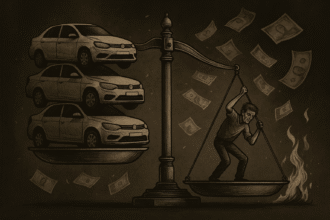
In a country where the minimum wage barely covers basic survival, expecting the population to pay R$ 300 for a video game or R$ 80 for a technical book reveals a chasm between people's reality and the state's fiscal logic. The tax burden on cultural and technological products in Brazil is among the highest in the world, reaching up to 72% of the final value in some cases.
According to a survey by the Brazilian Institute of Planning and Taxation (IBPT), published by UOL, a video game console like the PlayStation 4 had 72,18% of its price made up of taxes — which means that, of a product worth R$ 3,999, almost R$ 2,900 were taxes. Source.
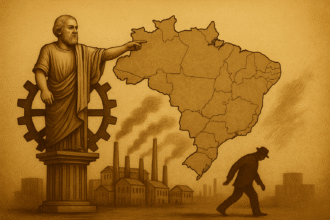
Instead of promoting access to culture, the Brazilian state suffocates it under the weight of taxes, treating books, games, films, software, and digital platforms as if they were luxury items. It's a policy that not only ignores the role of culture in civic development but also indirectly criminalizes the desire to learn, be informed, or be entertained legally.
Piracy as a response, not a crime
The consequence of this policy is visible: millions of Brazilians resort to piracy as a way to access content that, under normal market conditions, they could afford. Digital piracy, far from being a clear moral choice, often becomes the only possible way to enter the global cultural universe.
Felipe Deprá Galdino, in his work “Digital Piracy and Brazilian Criminal Law” (UNICEUB, 2017) demonstrates how the legal system treats piracy punitively, ignoring the economic and social factors that fuel it. Instead of reviewing its fiscal policy, the state responds with repression—thus reinforcing the cycle of informality, inequality, and marginalization.
Cultural taxation: a structural phenomenon
This problem is not limited to the gaming industry. Technical books, academic materials, professional software, online courses and streaming platforms They also face a hostile tax environment. Until recently, books were exempt from federal taxes, protected by an immunity provided for in the Constitution. However, in 2020, the federal government proposed, through tax reform, a tax on books, under the justification that the poorest "don't read." The proposal generated strong backlash from publishing industry entities, teachers, readers, and economists. The debate rekindled the essential question: is culture a right or a privilege? Source – G1.
Brazil's tax structure is designed to raise as much revenue as possible, not to promote access, innovation, or cultural diversity. This creates a restricted market, where only an elite group can consume legally—while the rest of the population is forced into informality.
When legal access becomes impractical
It's important to understand that piracy doesn't compete with legality on an equal footing. It only grows. when the legal environment is hostile, expensive or inaccessibleContrary to what some institutional campaigns suggest, the problem of piracy cannot be solved solely with moralistic propaganda or police operations. It requires an economic approach.
A country that wants to combat informality needs to first make formal access possibleThis means reviewing the fiscal logic applied to culture. It means understanding that access to information, art, literature, science, and technology is a pillar of freedom, and not a taxable privilege.
The politics of cultural luxury
What we see in Brazil is the construction of a model of institutionalized cultural exclusionInstead of subsidizing access—as many countries do—the state taxes cultural assets as if they were French champagne. The side effect? The unintentional encouragement of piracy.
The same government that punishes the sharing of PDF books or games via torrent is the one that taxes every step of the legal distribution chain, making the final product unviable. In many cases, an illegally downloaded course, tool, or book doesn't compete with the official version—it fills the void left by the State.
The international comparison
Just compare it to countries that understand culture as a strategic asset. In several European nations, books and educational materials are fully tax-exemptStreaming platforms are encouraged, libraries are digitized, and open-source software is funded by local governments.
In Brazil, the movement is moving in the opposite direction: burdening, bureaucratizing, censoring, and criminalizing. While the world debates access as a digital right, the Brazilian state continues to treat culture as a luxury item and consumers as suspect.
The role of economic freedom
The free market is, in essence, a mechanism for democratizing accessWhen there is competition, innovation, and freedom of pricing, products become more affordable, and piracy diminishes. The problem arises when the state distorts this process, replacing the logic of voluntary cooperation with tax coercion.
The defense of economic freedom is, in this context, also a defense of legitimate access to culture and knowledge. Reducing taxes on cultural products is not a tax privilege — it is a policy of freedom, inclusion, and real justice.
Conclusion: access is not a crime — it is blocked
The Brazilian state insists on taxing access to culture as if it were punishing the desire for knowledge. Piracy, in this scenario, is less a violation of the law and more a symptom of a system that fails to understand the social function of culture.
If we really want to combat piracy, we first need to tear down the barriers that make legal consumption impossibleAnd this begins with a profound change: treating culture as a public good, not a source of revenue. Treating citizens as free agents, not potential criminals.
📨 Did you like the analysis?
Subscribe now and receive exclusive content every week, without state filtering.
📌 References
- G1 – “Taxing books: how proposed tax reform could make books more expensive”
- UNICEUB – Felipe Deprá Galdino, Digital Piracy and Brazilian Criminal Law (2017)
- Valor Econômico – “Tax burden on games in Brazil exceeds 70%”
- UOL Economia – “Video games have a 72% tax”




 English
  Portuguese