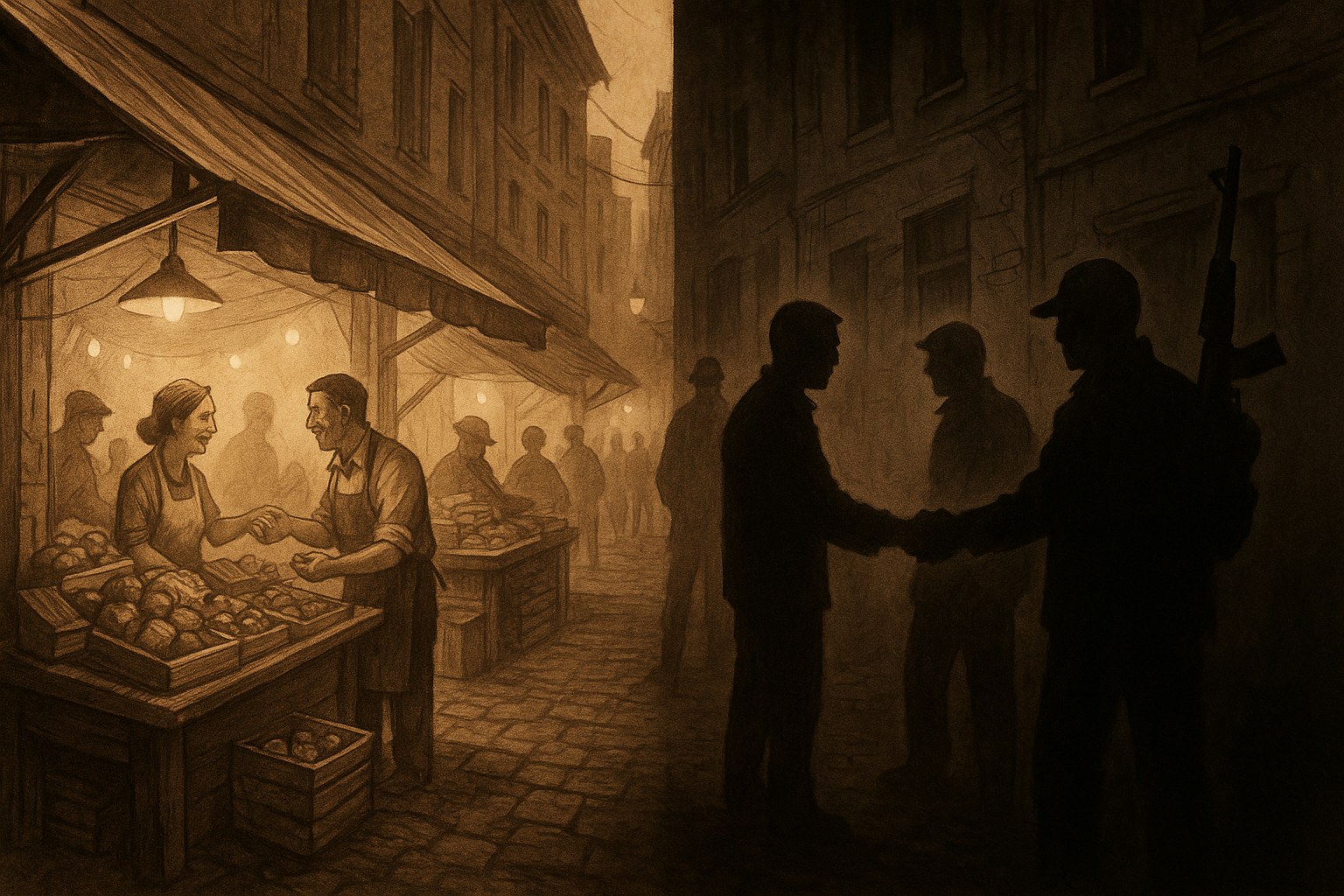
When it comes to organized crime and illegal markets, it's common to point the finger at drug traffickers, smugglers, and counterfeiters.
Few realize, however, that much of this underground market arises not from people's criminal natures — but from distortions imposed by the state itself.
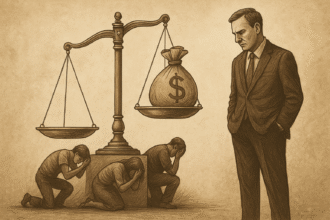
With abusive taxes, impossible regulations, and moral prohibitions, the State creates an environment where illegality becomes not only attractive—but inevitable.
Abusive taxes: the factory of informality and smuggling
When the government excessively taxes products such as cigarettes, electronics, or beverages:
- It raises prices above the real purchasing power of the majority of the population.
- Creates a economic prize for those who can trick the system and sell cheaper.
Practical example:
- In São Paulo, almost 60% of cigarettes sold come from the illegal market, according to the Brazilian Association to Combat Smuggling.
- In the electronics sector, cell phones and video game consoles are constant targets of smuggling due to high import tariffs.
Obvious conclusion:
The higher the tax, the greater the incentive to evade it.
Moral prohibitions: the fuel of organized crime
When the state prohibits certain goods (drugs, weapons, unlicensed software), it does not eliminate demand.
He just delivers the supply to illegal organizations, which:
- They operate without contractual guarantees, replacing negotiation with violence.
- They finance corruption networks, militias and cartels.
Historical example:
- THE Prohibition in the USA (1920–1933) banned the sale of alcohol.
- Result: explosive growth of organized crime, led by mobsters like Al Capone.
Repression creates violent monopolies.
Freedom, when it exists, is regulated by the market itself and by competition.
State and crime: an invisible symbiosis
The paradox is cruel:
- The State creates the illegal market with its irrational laws.
- The State increases its power and budget claiming the need to combat the crime it itself encouraged.
More repression, more violence, more budget — and the cycle feeds on itself.
Ultimately, organized crime is not an aberration of the market.
It is a product of state intervention against the free market.
The logic of the market versus the logic of coercion
In the free market:
- Exchanges are voluntary.
- Profit depends on customer satisfaction.
- Competition penalizes poor providers and rewards the best.
In the illegal market created by the State:
- The exchange is made under threat.
- Profit depends on violence and corruption.
- Monopoly is guaranteed by the physical elimination of competitors.
The difference between a legal market and a criminal market is often just the legislator's signature.
Conclusion: less prohibition, more freedom
Truly fighting organized crime is not a matter of increasing repression.
It's a matter of:
- Reduce taxes that turn common products into luxury items.
- Legalizing and regulating products whose prohibition only fuels violent networks.
- Restore the logic of the free market, where the one who offers the best wins, not the one who kills the most.
Where the State imposes coercion, violence arises.
Where the market offers choice, prosperity is born.
📩 Do you want to understand how state interventionism destroys freedom and encourages violence?
Subscribe to the Economic Radar newsletter and receive critical analysis in your email.

 English
  Portuguese