The Price is High — Because the Real Is Worth Little
Every imported product launch in Brazil repeats the same ritual:
“It costs 59 dollars abroad and 800 reais here? Absurd!”
“Why don’t they charge a price adapted to our reality?”
“This company is greedy!”
The new victim of popular indignation was Nintendo.
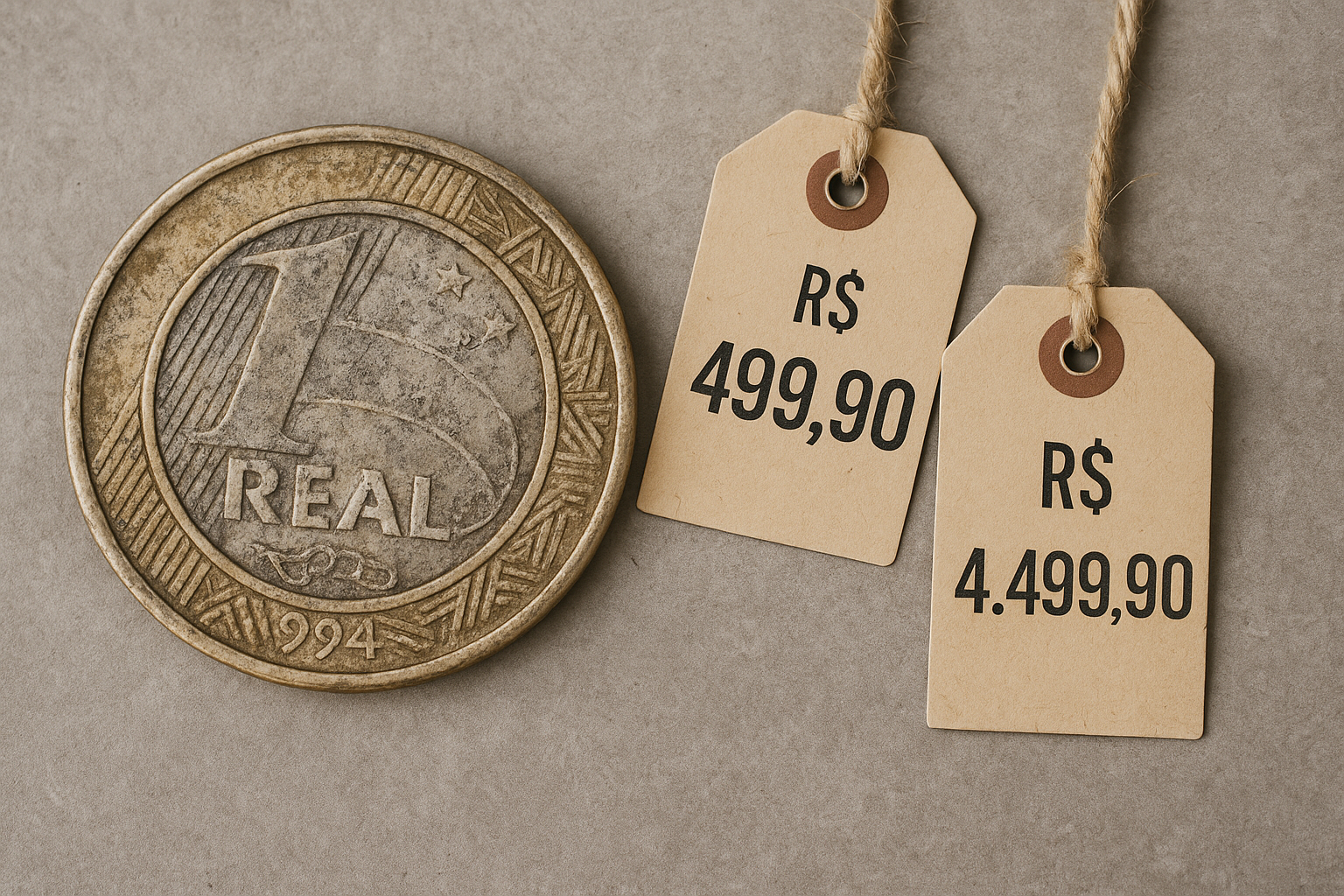
In April 2025, the company announced that Mario Kart World will cost R$ 499.90 in Brazil — while in the United States the price will be US$ 80 (source: Tecmundo/Voxel).
The bundle of Switch 2 with the game will come out by R$ 4,799.90. And the console alone will cost R$ 4,499.90 — more expensive than a PlayStation 5 in the country, as pointed out by G1.
The problem isn't Nintendo. It's the real thing.
The math is simple: if $80 equals R$500, the problem isn't the price set by the company — is in the value of your currency.
And the reason for this is not in the hands of Nintendo, Microsoft, or Sony. It's in the hands of Brazilian government, which you finance with taxes, tolerate with bureaucracy and accept with inflation.
Making a Mario Kart World costs practically the same in Japan, the US, or Brazil. What's the difference?
- Disproportionate import taxes
- Tax burden embedded in each stage of the chain
- Absurd customs and regulatory costs
- Exchange rate instability
- Devaluation of the real caused by fiscal deficits and domestic inflation
The company charges what it needs to cover its costs, margins and risks.
It is not obliged to compensate for Brazil's chronic inefficiency — The Brazilian State should be responsible for this.
The illusion of the “fair price”
Many people believe that it would be “fair” for multinationals to adapt their prices to the “Brazilian reality.”
But this reverses the moral and economic logic: It's not the market that should adapt to inefficient governments. It's governments that should stop destroying their citizens' purchasing power.
The “Brazil cost” — this mix of taxes, obstacles, and volatility — is not the fault of Mario, Donkey Kong, or Zelda.
It is the fault of a fat, wasteful, corrupt state that is incapable of guaranteeing monetary stability.
Meanwhile, it's always easier to attack the businessman—who fulfills contracts and delivers products—than to hold those who control the currency and public finances accountable.
The cheap real is the symptom. The dysfunctional state is the cause.
If you think it's expensive to pay R$ 500 in a new game, know:
- The real culprit is not the shopkeeper.
- It's not the distributor.
- It's not Nintendo.
It's the real, which has lost value.
It is the National Treasury, which prints money and generates inflation.
It is the tax system, which penalizes those who produce and rewards those who consume public resources.
Meanwhile, the government continues to create deficits, increasing public debt and passing the bill on to citizens — as demonstrated in the recent BTG Pactual report (source: G1).
Conclusion: The price of inefficiency is paid on the sticker
The product is expensive because:
- The country is expensive.
- The currency is weak.
- The government is inefficient.
There's no point in demanding that a global company lower its prices out of pity for our reality.
What we should demand—vehemently—is a country where the currency has real value, taxes are civilized, and economic freedom flourishes.
Mario Kart's price is just the symptom.
The disease is in the Planalto Palace, in the National Congress and in the agencies that govern our economy.
📩 Do you want to understand why your money buys less and less?
Subscribe to the Economic Radar newsletter and receive critical analysis on inflation, currency, and purchasing power — straight to your inbox.
🛠️ Note:
This post was originally published on April 17, 2025 and updated on April 24, 2025 to include new data on the Switch 2 launch and the Brazilian currency situation.




 English
  Portuguese